
First, find out where the water comes from
Tape a square of plastic wrap to the wall and floor, then seal the edges with duct tape. Check it after a day or two. Moisture under the plastic on the wall side means water is moving through the concrete. Moisture on the room side means humidity condensing from the air.
Then look at the outside. Gutters that spill at the foundation, a downspout that ends beside the wall, and soil that slopes toward the house all push water down the wall. Many basements dry up with those fixes alone, before any interior work.
| Symptom | Likely source | Interior fix |
|---|---|---|
| Damp patches on the wall face | Moisture through porous concrete | Masonry sealer after cleaning |
| Water at the wall and floor joint | Hydrostatic pressure | Perimeter drain channel to a sump |
| White powder on masonry | Efflorescence from wet concrete | Fix the water first, then clean |
| Puddle in one corner | Crack or tie-rod hole | Hydraulic cement or crack injection |
| Wet floor with no rain | Plumbing leak | Find the leak, not waterproofing |
The interior options, from simplest to biggest
- Clean and seal the wall. Wire brush the surface, clean off salts and apply a masonry waterproofing coating in the thickness the label gives. This handles damp walls, not flowing water.
- Patch active cracks. Hydraulic cement or an injection resin closes a crack that is weeping. A moving crack may reopen.
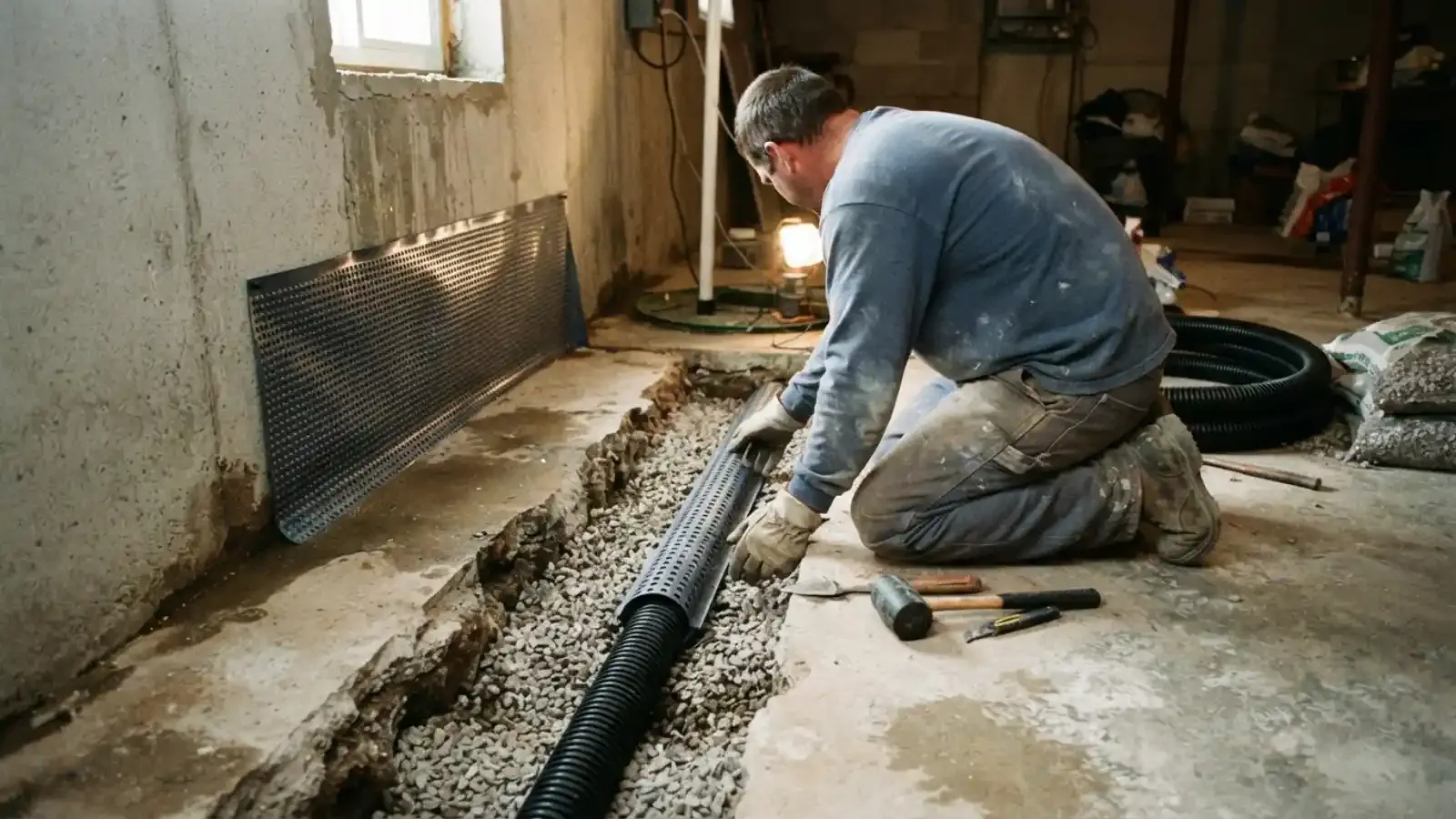
- Add an interior drain channel. A channel along the footing collects water at the floor joint and sends it to a sump pit.
- Install or upgrade a sump pump. The pit holds the water until the pump lifts it out and away from the house.
- Add a vapor barrier or dehumidifier. If humidity is the issue, control the air as well as the wall.
Interior systems manage water that has already reached the foundation. They do not stop it from reaching the wall. That is why a sump pump and drain are the core of most interior systems and why they are often paired with exterior grading work.
Ground and water facts for Hazelwood basements
The City of Hazelwood publishes a frost depth of 30 inches, which is the depth at which footings are placed. That tells you a basement wall sits well below the line where the ground freezes, and that water in frozen soil pushes on the wall in late winter as the ground thaws. If your basement is wettest in a late-winter thaw, soil moisture and snowmelt are likely the cause.
Hazelwood also sits near creeks that drain to the Missouri River, and heavy rain can raise the water table for a day or two. If you plan any outside digging, such as extending a downspout or regrading, dial 811 first. The city asks residents to do so.
Section R405 of the International Residential Code (IRC) covers foundation drainage and section R406 covers dampproofing and waterproofing, and the City of Hazelwood lists the 2021 IRC among its adopted codes. Those sections are the standard, and an interior drain system is a retrofit for the water those sections are meant to keep out.
What affects the price of interior waterproofing
We do not publish a dollar figure for waterproofing because costs vary with the length of wall, the system and the condition of the floor. Here is what drives the number.
A finished basement that floods may be a sudden-event claim, but ongoing seepage usually is not covered. Ask your insurer which applies.
What interior waterproofing cannot do
Be wary of a sealer sold as a cure for a basement that floods. A paint film on the wall face cannot hold back water pressing from outside. It peels, blisters and lets water behind it.
An interior system also does not fix a foundation wall that is bowing, a crack that is growing, or a downspout dumping beside the wall. Those need a structural engineer or exterior work. A plumber can identify drainage and pump problems but does not do structural repair.
- Interior sealers do not stop active leaks.
- Drain channels do not fix a structural crack.
- A sump pump does not help if power fails, so consider a battery backup.
Checklist before you hire anyone
- Run the plastic-wrap test to see where moisture comes from.
- Clean gutters and extend downspouts at least several feet from the wall.
- Check that soil slopes away from the foundation.
- Test the sump pump by pouring water into the pit.
- Look for plumbing leaks near the water heater and washer.
- Take photos and note when water appears after rain.
A pit and pump are plumbing work. See our sump pump installation and repair page, or basement waterproofing for the full overview of what we do and do not handle. If the water is clear and appears with no rain, check for a pipe leak with leak detection.
When to call a pro
Call a plumber if the sump pump runs constantly, will not turn on, or the pit overflows. Call if water appears with no rain or if you see a wet floor near a supply line. Call a structural pro if you see a stair-step crack or a wall pushing inward.
If water is rising now, shut off power to the area when it is safe, move valuables and call. Our line is staffed 24/7. We serve Florissant and Bridgeton as well as Hazelwood.
Frequently asked questions
For damp walls, sealers can help. For water pushing at the floor joint, a drain channel and sump pump work from the inside. If gutters or grading are sending water to the wall, fix those too.
Not a leak. It can slow dampness through the wall face but cannot hold back water pressing from outside, and it often peels.
Tape plastic wrap to the wall for a day or two. Moisture on the outside of the plastic is condensation. Moisture under it is coming through the wall.
The city lists a 30 inch frost depth, so thawing soil and snowmelt can load water against the wall. Check gutters, downspouts and grading first.
Yes, if you dig. The city asks residents to dial 811 before digging so buried utilities are marked.
A battery backup is a good idea, because storms can cut power when the pump is needed most. Ask your plumber about options for your pit.
Questions about your situation? A licensed plumber is on the line any hour.
Call (855) 575-2890