
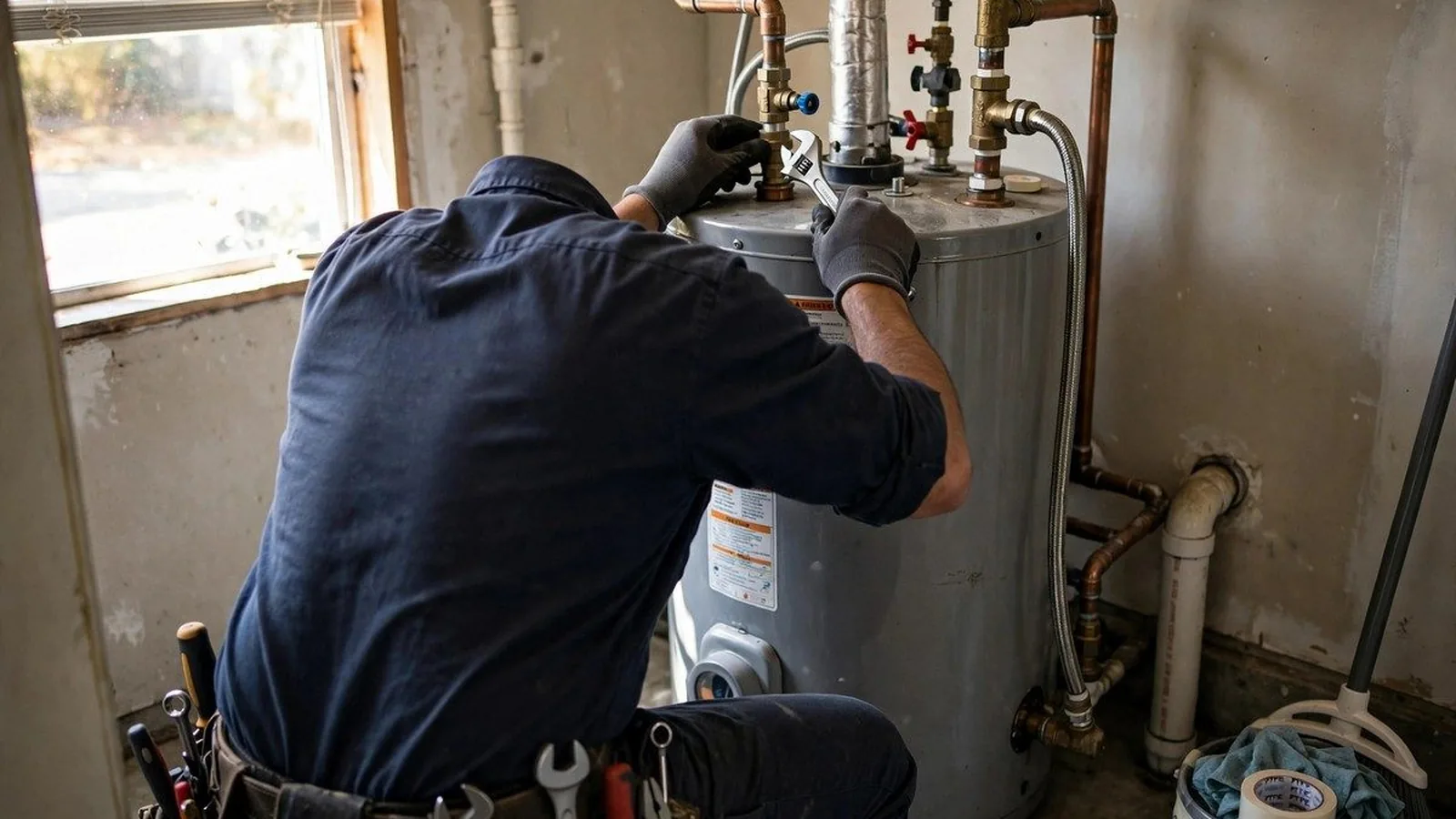
When a water heater problem is an emergency
No hot water can wait until morning. A leak, a smell of gas or a tank that is too hot to touch cannot. Water running from the tank base means the shell may have failed, and the leak usually grows.
Close the cold water valve on the pipe feeding the tank, then switch the heater off. For an electric unit, flip its breaker. For a gas unit, turn the gas control to off or pilot. Then call, any hour, and we will book a same-day appointment when available.
- Water collecting around the base of the tank.
- Steam or hissing from the relief valve discharge pipe.
- Rusty or brown hot water from every hot tap.
- A tripped breaker that trips again as soon as you reset it.
If you smell gas, do not touch switches or try to relight anything. Leave the house right away and call Spire at 800-887-4173 or 911 from outside. We can look at the heater once the gas utility says it is safe.
Gas, electric and hybrid tanks fail in different ways
Each type of heater has its own weak spots, so the first question we ask is which one you own. The label on the tank, usually near the top or on the side, names the fuel and the model.
| Type | How it heats | Faults we see most |
|---|---|---|
| Gas tank | Burner under the tank, flue overhead | Dirty pilot, bad thermocouple, failed gas control valve, blocked flue |
| Electric tank | Two heating elements inside the tank | Burned element, bad upper or lower thermostat, tripped high-limit reset |
| Hybrid (heat pump) tank | Heat pump on top plus backup elements | Clogged air filter, condensate drain backup, fan or compressor fault, element failure |
Hybrid units cost more up front and sip power, but they have more parts that can fail. They also need open air around them, so a tight closet can cause trouble that has nothing to do with the unit.
A plumber is on the 24/7 line now. Call before a small leak turns into a flooded basement.
Call (855) 575-2890Parts we check first
Most repairs come down to four parts. We test them in order, from cheapest to fix to most costly, so you are not paying for a new tank when a thermostat will do.
- Pressure relief valve. If it drips or discharges steam, the valve may be worn or the tank pressure may be too high. A failed relief valve is a safety part, so we replace it instead of capping it.
- Anode rod. This sacrificial rod fights rust inside the tank. A rotten rod makes rotten-egg odor or rust-colored water, and swapping it can add years if the shell is still sound.
- Thermostat. Water that is lukewarm or scalding often traces to a bad thermostat. Gas units use one control, and electric units have two.
- Heating element. On an electric tank, a burned upper or lower element gives short hot showers or none at all. We test each with a meter before replacing anything.
Sediment in the bottom of the tank causes popping and rumbling noises. A flush can help, but a tank packed with scale may be near the end of its life, and we will say so.
What water heater repair costs
The bill depends on which part failed and how hard it is to reach. We diagnose first and give a clear price before work starts, so you can compare it with a new unit. National cost guides put a new 40 to 50 gallon tank installed at $600 to $3,100, so a repair makes sense only when it costs well below that.
Check your paperwork before paying for parts, because some manufacturers still cover certain components or the tank itself for a set period.
Cold weather and water heaters in Hazelwood
The City of Hazelwood publishes a winter design temperature of 2 degrees F. A heater in an unheated garage, a crawl space or an outside wall works harder in that cold, and supply pipes near it can freeze. If your heater lives in one of those spots, ask us about insulating the pipes or moving the unit during a replacement.
In January 2024, a cold snap brought Missouri American Water crews to 16 main breaks in a single day, and one local plumber reported more than 180 calls in a day. Know where your main shutoff is before a freeze, because pipes tend to burst as they thaw. When repair is no longer sensible, see water heater replacement or the tankless option.
The IPC requires a temperature and pressure relief valve on storage water heaters, and gas models are built to ANSI Z21.10.1. A relief valve that drips is a warning to diagnose, never something to cap or plug.
Keeping the next repair small
Flush a few gallons from the drain valve once a year to clear sediment. Test the relief valve by lifting its lever briefly, with a bucket under the discharge pipe, and replace it if it will not reseat. Keep boxes and chemicals away from a gas burner.
If the heater is more than a decade old and leaking, skip the patch. We also install new units, covered under water heater installation, and we serve Florissant and the towns around Hazelwood.
Frequently asked questions
Yes. The line is open 24 hours a day, seven days a week. Call, tell us the fuel type and whether it is leaking, and shut off the water to the tank. We offer same-day appointments when available.
Leave the house right away without touching switches, then call Spire at 800-887-4173 or 911 from outside. Do not try to relight the pilot. We can inspect the heater after the gas utility clears the home.
On an electric tank, a burned element or a bad thermostat is the usual cause. On a gas tank, look to the thermostat control, pilot or a heavy layer of sediment. A tech tests each part before replacing it.
No. The relief valve is the safety device that stops the tank from over-pressurizing. If it drips, the valve or the water pressure needs attention, and we replace the valve instead of blocking it.
Often it can be repaired. Clogged filters, drain backups and element failures are common fixes. Compressor or sealed system faults can cost close to a new unit, and we will explain the choice.
Yes. We state a clear price before work starts, after we find the fault and see how much access we have.
On an electric tank the usual causes are a tripped breaker, a failed heating element or a tripped high-limit reset. On a gas tank it is often a pilot or thermocouple problem. Check that the breaker or the gas supply is on, and if it is, call. If you smell gas, leave the house and call Spire at 800-887-4173 or 911 first.
Questions about your situation? A licensed plumber is on the line any hour.
Call (855) 575-2890