
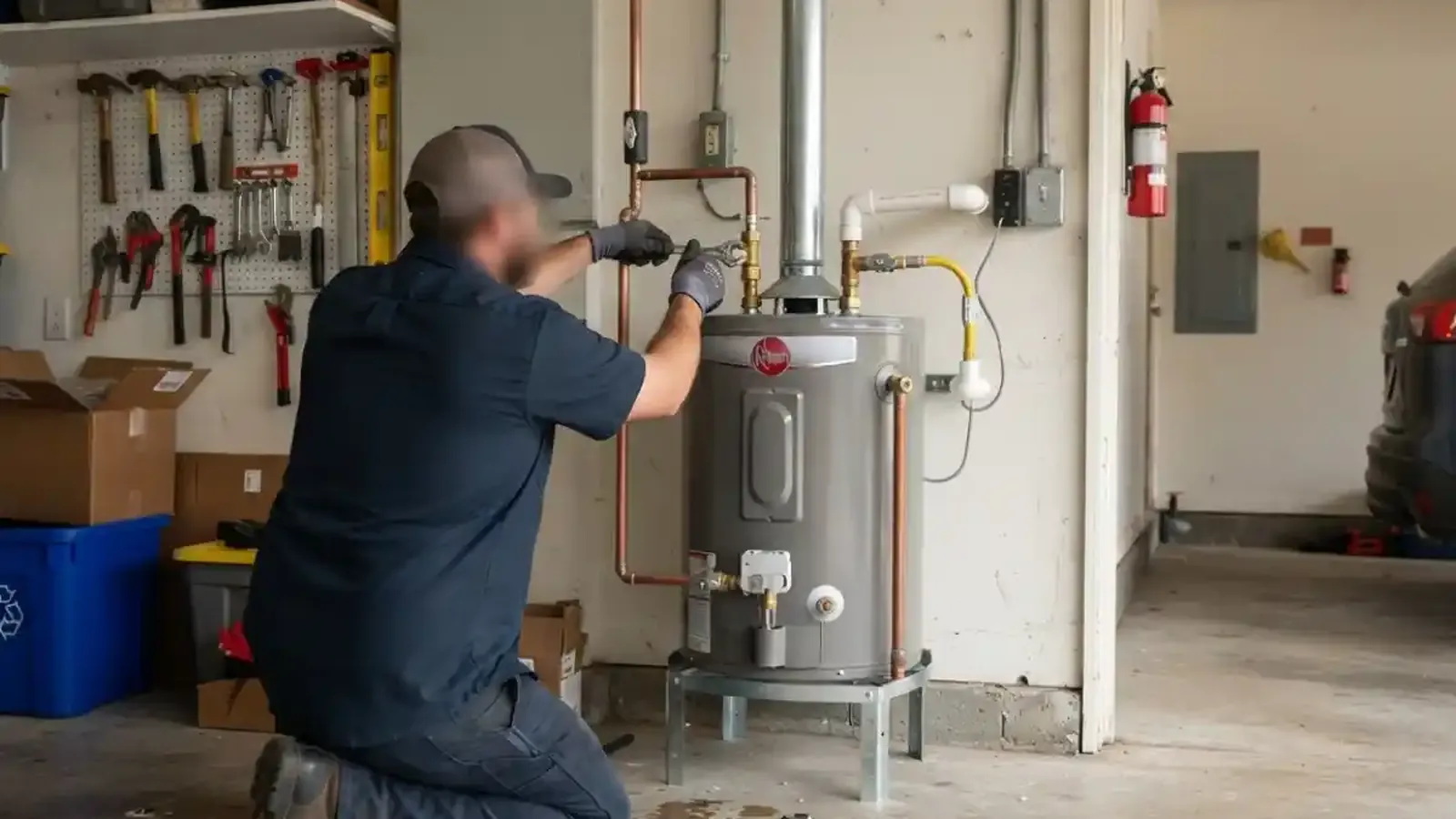
What a complete installation includes
A new water heater is more than a tank on a floor. The hookup has to meet manufacturer instructions and the plumbing code, and the parts around the tank matter as much as the tank.
- New water connectors, shutoff valve and a drain valve.
- A temperature and pressure relief valve with a discharge pipe run to a safe spot.
- A drain pan where a leak could damage finished space.
- Gas line, flue or electrical connection sized for the unit.
- An expansion tank where the system needs one.
Skipping any of these is how small leaks turn into big ones. We list each part in the price before work starts.
Expansion tanks and why they matter
When a heater warms water, the water expands. A system with a check valve or a pressure reducing valve has no place for that extra volume, so pressure rises and stresses the tank, the relief valve and the fixtures. A small expansion tank on the cold supply absorbs it.
Many homes need one and some do not. We test your static pressure and check for a backflow device before deciding. National guides list an expansion tank at $100 to $400 installed.
Venting and fuel choices
| Type | Venting | What else it needs |
|---|---|---|
| Atmospheric gas | Metal flue to the chimney or a vent pipe | Gas line, combustion air, draft check |
| Power vent or direct vent gas | Plastic pipe through a wall or roof | Gas line, electrical outlet for the fan |
| Electric | None | Dedicated 240 volt circuit and breaker |
| Hybrid heat pump | None, but needs open air and a condensate drain | Electrical circuit and floor drain or pump |
New gas venting alone can cost $500 to $1,500 nationally. A new electrical circuit runs about $250 to $900, and a gas line upgrade $350 to $2,000. Most jobs need none of these, but a fuel change usually does.
Planning a water heater install? Call to talk through fuel, size and permits.
Call (855) 575-2890Water heater installation cost
National cost guides put a 40 to 50 gallon tank installed at $600 to $3,100. The wide spread comes from fuel, tank type and the work around the tank. We give a clear price before work starts, after seeing the location.
A new heater can lower your energy use, and some utilities and manufacturers offer rebates on efficient models. Ask Ameren Missouri or Spire what applies to you.
Code, permits and placement in Hazelwood
The City of Hazelwood contracts with St. Louis County for plumbing permits and inspections, and plumbing work requires a St. Louis County license. That means your installation should be permitted through the county, with a licensed plumber on the job. A missing permit can come up when you sell, so ask for the paperwork.
Hazelwood publishes a frost depth of 30 inches and a winter design temperature of 2 degrees F. If the heater and its pipes sit in a garage or an outside wall, plan for insulation or a warmer location. Gas units in a garage also have rules about ignition height, which we check against the manufacturer instructions.
The City of Hazelwood lists the 2021 International Fuel Gas Code among the codes it has adopted, and plumbing permits and inspections run through St. Louis County. Under the International Plumbing Code (IPC) standard the county applies, plus the manufacturer's instructions, the fuel gas code and the county's plumbing rules, a permitted install has three sets of requirements to meet.
What happens on install day
We set the tank, connect water, fuel and venting, and fill the tank before power or gas goes on. That order prevents burned elements and dry firing. Then we test the relief valve, check for leaks and set the thermostat.
If the old unit is still running, we haul it away. If you are comparing a tank to an on-demand unit, read about tankless water heaters. If something is already leaking, see water heater repair. We serve Maryland Heights and the other nearby towns too.
Frequently asked questions
Plumbing permits for Hazelwood go through St. Louis County. We confirm what your job needs and pull the permit for you.
It depends on whether your system is closed, such as with a check valve or pressure reducing valve. We test the pressure and decide on site. National guides list the tank at $100 to $400 installed.
A straight swap is often a few hours, while fuel changes or new venting take longer. We tell you the plan before we start and do not promise an arrival time.
Often yes, but the winter design temperature of 2 degrees F means exposed pipes need insulation, and gas units have placement rules. We check both when we plan the job.
National guides put a 40 to 50 gallon tank installed at $600 to $3,100. Your price depends on fuel, size, venting and permits, and we state it clearly before work starts.
Gas heats fast, electric is simple and hybrid uses less power but needs space. The right choice depends on what your home is already set up for.
Questions about your situation? A licensed plumber is on the line any hour.
Call (855) 575-2890