
What actually causes toilet clogs
Toilets are built to move waste and paper, and nothing else. A modern 1.6 gallon per flush toilet has a trap about 2 inches wide, so a wad of wipes or a toy can wedge in it. Even a toilet that clears with a plunger may be telling you something about the flush.
Heavy paper use is the most common cause in a household. Thick, quilted or triple-ply paper holds together in water and makes a plug. Cheaper, thinner paper breaks apart in seconds, which is why a rental with one brand never clogs and a house with another does.
| Cause | Sign | Prevention |
|---|---|---|
| Too much paper | Clogs after heavy use | Flush twice, use thinner paper |
| Wipes and cotton | Clogs that need a plumber | Trash can, never the toilet |
| Weak flush | Water swirls but waste lingers | Clean rim jets, check the flapper |
| Partial trap blockage | Slow flush, gurgling | Plunge, then auger |
| Main line buildup | Other drains slow too | Camera and cleaning |
Habits that prevent most clogs
- Keep wipes, floss, cotton swabs and feminine products out of the bowl.
- Use a small amount of thin paper and flush twice for large loads.
- Keep a small trash can with a lid next to every toilet.
- Do not flush kitty litter, paper towels or diapers.
- Teach children that the toilet is not a toy bin.
Package labels that say flushable are not a guarantee. Wipes labeled flushable can still tangle in a drain and hang up on roots in an old pipe. Wipes that snag in the pipe under your house can also reach the public sewer, so the safest rule is to trash them.
Check the fixture itself
A toilet with a good flush moves water fast enough to carry waste through the trap in one push. If yours leaves paper behind or the bowl water level looks low, the fixture may be the problem. Check the tank first, since that is where most flush issues start.
- Lift the lid and watch a flush. The tank should empty quickly and refill to the fill line marked on the inside.
- Check the water level. If it sits well below the overflow tube, the flush may not have enough volume.
- Check the flapper. A worn or warped flapper leaks and leaves less water for the next flush.
- Inspect the rim jets. Small holes under the rim can be blocked by mineral buildup and weaken the bowl wash.
- Test the flush with a small load. Flush a handful of paper and watch whether the bowl clears in one push.
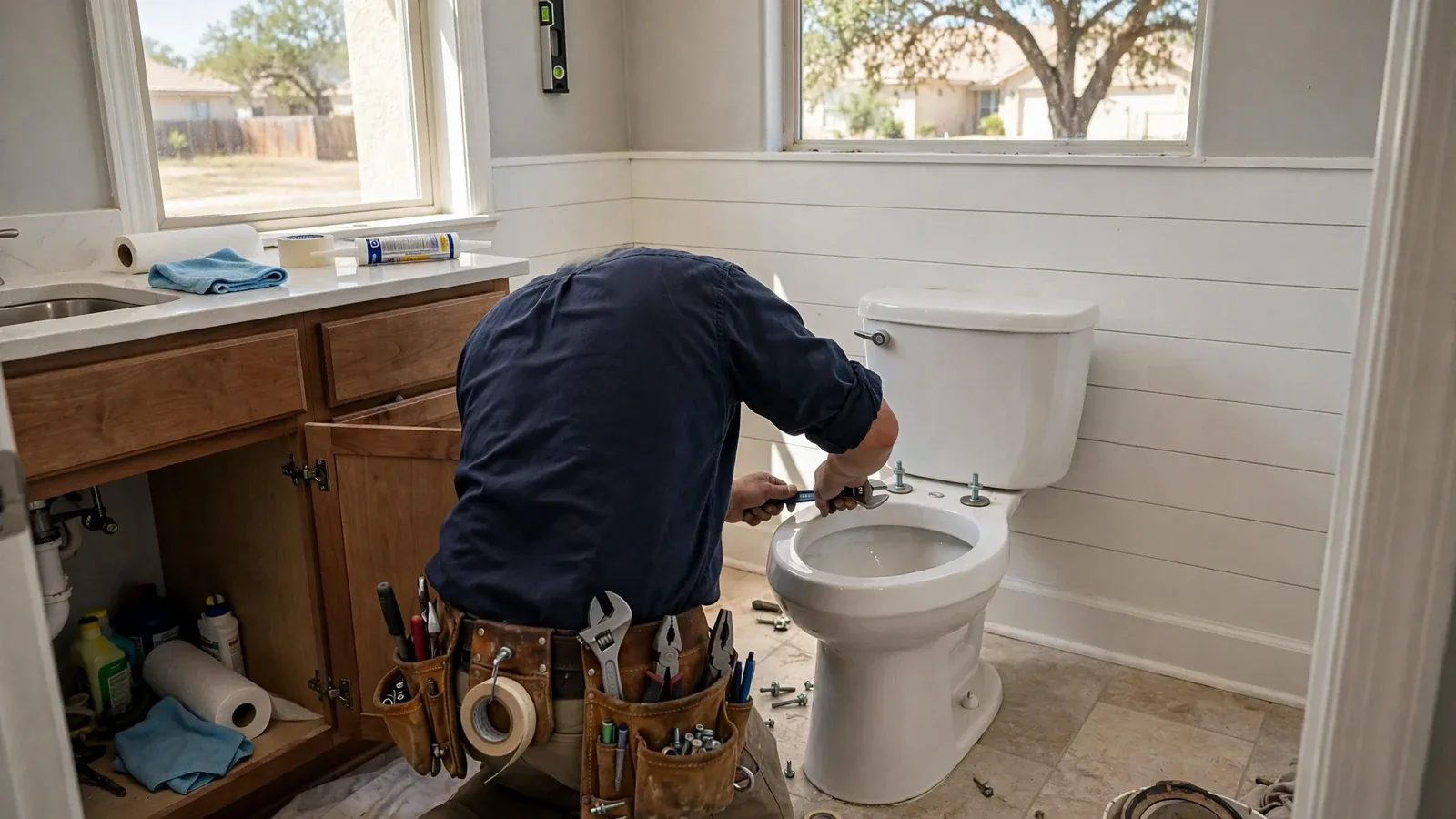
If the fixture is old or has been clogged often, toilet repair or replacement is worth a look. A newer toilet clears with a stronger flush while using less water.
Hazelwood water and what it does to flappers
Missouri American Water uses chloramines as a disinfectant, and chloramines are known to age rubber parts such as toilet flappers and fill valve seals faster than plain chlorine. If your flappers go soft or sticky and the tank constantly runs, expect to replace the rubber parts more often. A new flapper costs little, and a weak flush from a worn one is one of the easier clog causes to cure.
The same water report shows hardness at the Missouri River plants ranging from roughly 5 to 13 grains per gallon in 2023, so mineral buildup under the rim and in the jets is realistic. Test your own tap or ask Missouri American Water at 866-430-0820 to see where you fall.
EPA WaterSense standards say toilets use 1.28 gallons per flush or less and must pass a solid waste removal test. If your toilet clogs often, the model itself may be part of the problem, and a better-rated bowl is a cheaper fix than repeated service calls.
What to do when a clog happens
Stop flushing as soon as the water rises. Lift the tank lid and push the flapper down to stop more water entering the bowl. Plunge with a flange plunger, which seals better than a flat cup, using steady push and pull strokes rather than quick jabs.
If the bowl does not clear after a few tries, a closet auger can reach the trap. Do not use chemical drain cleaners in a toilet. The chemicals sit in a full bowl, can splash and can damage the porcelain seal and a plumber's hands.
When a clogged toilet is not just a toilet problem
Watch for these signs. If a tub or shower drains slowly when you flush, if a floor drain gurgles, or if two toilets clog together, the blockage is further down. That is a main line clog, and the plunger will not touch it.
A single clog that does not clear with a plunger or auger can also mean an item is stuck in the trap or past it. A plumber can remove the toilet and check the trap directly, or run a camera if the line is the question. See drain cleaning for main line clogs, and sewer inspection if it keeps coming back.
If sewage is rising in a tub or on the floor, stop using water and call. Our 24/7 line is staffed for backups. We serve Florissant and Bridgeton as well as Hazelwood.
Frequently asked questions
The usual causes are heavy paper, flushed wipes, a weak flush from a worn flapper or low tank level, or buildup in the rim jets. If other drains slow too, the cause may be the main line.
Not really. They do not break down like paper and can tangle with roots or grease in the line. Put them in the trash instead.
Chloramines can age rubber parts such as flappers and seals. If your flapper turns soft or leaks, replace it. It is an inexpensive fix that restores flush strength.
We advise against it. Chemicals can sit in the bowl, splash back and damage the finish, and they are unsafe for the plumber who opens the line afterward.
If a tub or floor drain backs up when you flush, or more than one toilet clogs together, the blockage is likely in the main line and needs a cable or jetting, not a plunger.
Yes. Our line is staffed 24/7. Shut the water valve behind the toilet, stop using other fixtures and call. We offer same-day appointments when available.
Questions about your situation? A licensed plumber is on the line any hour.
Call (855) 575-2890