
What the local water report says
Missouri American Water supplies the Hazelwood area. About 80 percent of its surface water comes from the Missouri River and about 20 percent from the Meramec River, and the utility treats it with chloramines.
Its 2023 report lists total hardness at the Missouri River plants from 82 to 226 parts per million, which works out to roughly 5 to 13 grains per gallon. That spans moderately hard to very hard. The report does not say which plant feeds which street, so it cannot tell you what comes out of your tap.
Test your own tap, or ask the utility. Missouri American Water customer service is at 866-430-0820, Monday through Friday, 7 a.m. to 7 p.m., and you can ask for the current report.
Softener or filter
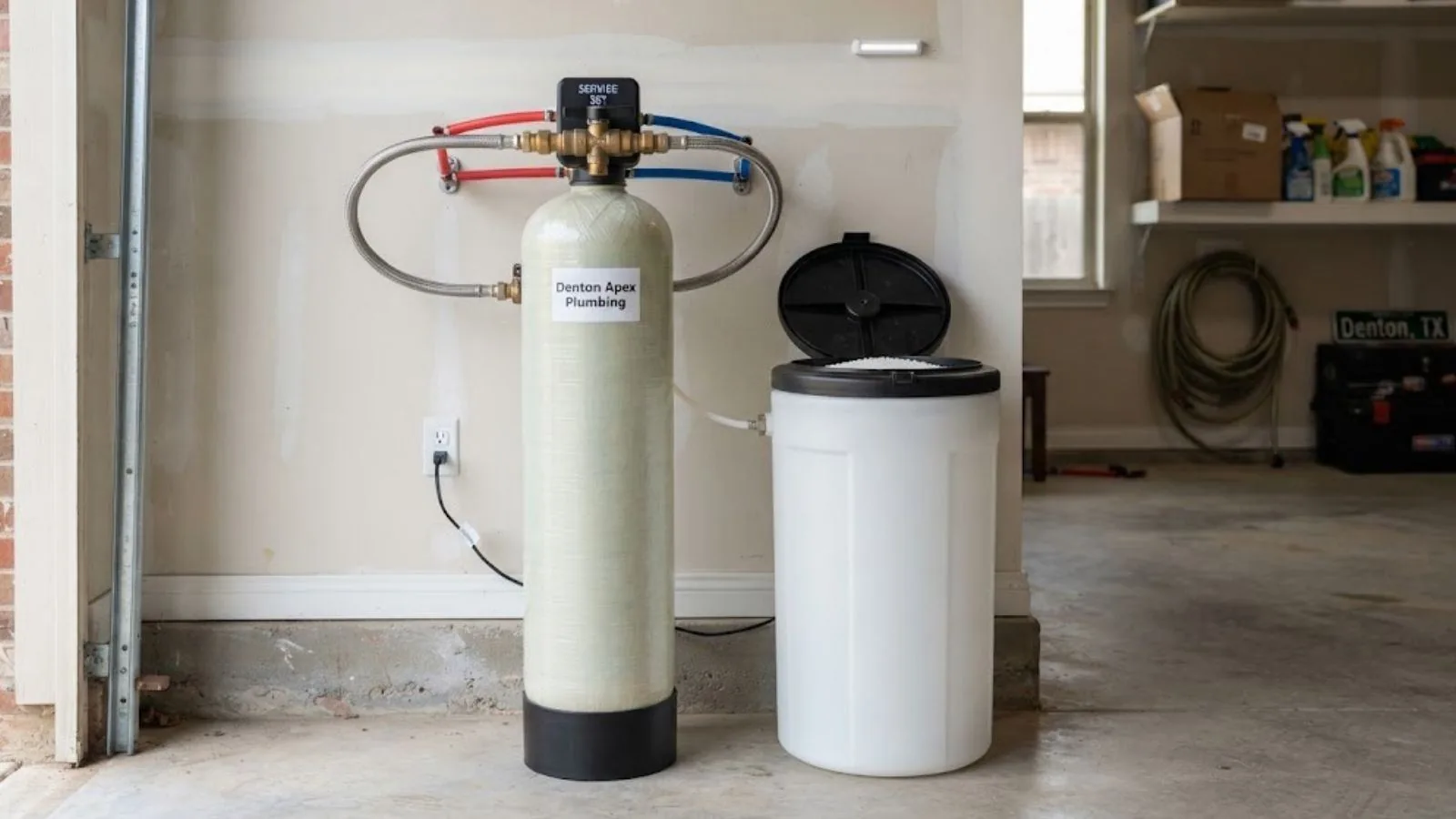
People mix these up because both clean up water, but they solve different problems. A softener swaps calcium and magnesium for sodium or potassium, which stops scale. A filter removes things like chlorine taste, sediment and, with the right media, chloramine.
| Water softener | Carbon filter | |
|---|---|---|
| Main job | Remove hardness minerals | Reduce taste, odor and some chemicals |
| Stops scale on fixtures | Yes | No |
| Reduces chloramine taste | No | Yes, with catalytic carbon media |
| Needs salt or potassium | Yes | No |
| Ongoing upkeep | Refill salt, service the valve | Replace the cartridge or media |
A home with hard water and a chloramine taste complaint often needs both. They are installed in a set order, with the softener on the main line and the filter either at the same spot or at the kitchen tap.
Not sure which system you need? Call to schedule a plumber to look at your setup.
Call (855) 575-2890Chloramine and your plumbing
Chloramine lasts longer in the pipes than chlorine, which is why utilities use it. It can wear on rubber parts, including toilet flappers and some seals, so a flapper that cracks sooner than you expect may be chloramine at work. We do not claim it corrodes copper.
If you keep an aquarium, standard dechlorinating drops do not remove chloramine. Use a conditioner labeled for it, or a filter rated for chloramine, before water goes into the tank.
A basic carbon filter removes chlorine well but handles chloramine poorly. For chloramine, ask for catalytic carbon and check the manufacturer's rating.
What we do and what we do not do
We install softeners and filters, connect the drain, add a bypass valve and reset the valve settings. We also repair softeners and replace failed filters.
We do not test your water in a lab and we do not promise a result such as zero scale. A softener also does not make water drinking quality, and a filter on the kitchen tap is the right place for taste. If you want a water test, a certified lab or the utility's report is the place to start.
- A softener will not remove chloramine.
- Softened water can feel slick, and that is the change in minerals, not soap left behind.
- If someone in the house is on a low-sodium diet, ask about potassium-based salt or keep a tap unsoftened.
What affects water treatment pricing
Pricing depends on the system and the install, so we do not post dollar figures. We give a clear price before work starts, after seeing where the equipment will sit.
Insurance does not cover softeners or filters, since they are an upgrade and not a repair.
Hard water, heaters and Hazelwood homes
If your tap tests at the high end of the reported range, scale builds faster inside the water heater and on faucet aerators. That shortens the life of a tank, so softened water can pay off on the heater side. Our water heater repair page covers what scale does to a tank.
Plumbing permits in Hazelwood run through St. Louis County, and we confirm whether a new softener hookup needs one. If your water tests near the low end, around 5 grains, a softener may be more than you need, and a filter alone could be the better buy.
Cation exchange softeners are tested to NSF/ANSI 44, and carbon filters to NSF/ANSI 42 and 53. Ask for the certification on the model's data sheet, because a claim on the box and a tested certification are not the same thing.
Before you buy a system
Start with the numbers. Use a test strip or a lab test, write down the hardness in grains per gallon and the iron level, and compare them with the utility's report. Then decide whether the problem is scale, taste or both.
Think about space and drainage. A softener needs a drain within reach and a path for salt deliveries. For homes in Maryland Heights, our Maryland Heights page covers service on that side of the county.
Frequently asked questions
Missouri American Water reported 82 to 226 parts per million at its Missouri River plants in 2023, or roughly 5 to 13 grains per gallon. The report does not state which plant serves which street, so test your own tap or ask the utility.
No. A softener removes hardness minerals. For chloramine you need a filter with catalytic carbon or a similar media rated for it.
Use a home test strip for a quick hardness reading, or send a sample to a certified lab. You can also ask Missouri American Water for its current report at 866-430-0820.
Softened water has more sodium or potassium than hard water. Most people do not notice, but if you are on a low-sodium diet, ask your doctor and consider a separate unsoftened drinking tap.
It can wear rubber parts such as flappers and seals. We do not claim it corrodes copper. Replacing a worn flapper with a chloramine-resistant one is a simple fix.
It depends on the system, the hardness and the install, so we do not post a figure. We give a clear price before work starts.
Questions about your situation? A licensed plumber is on the line any hour.
Call (855) 575-2890