
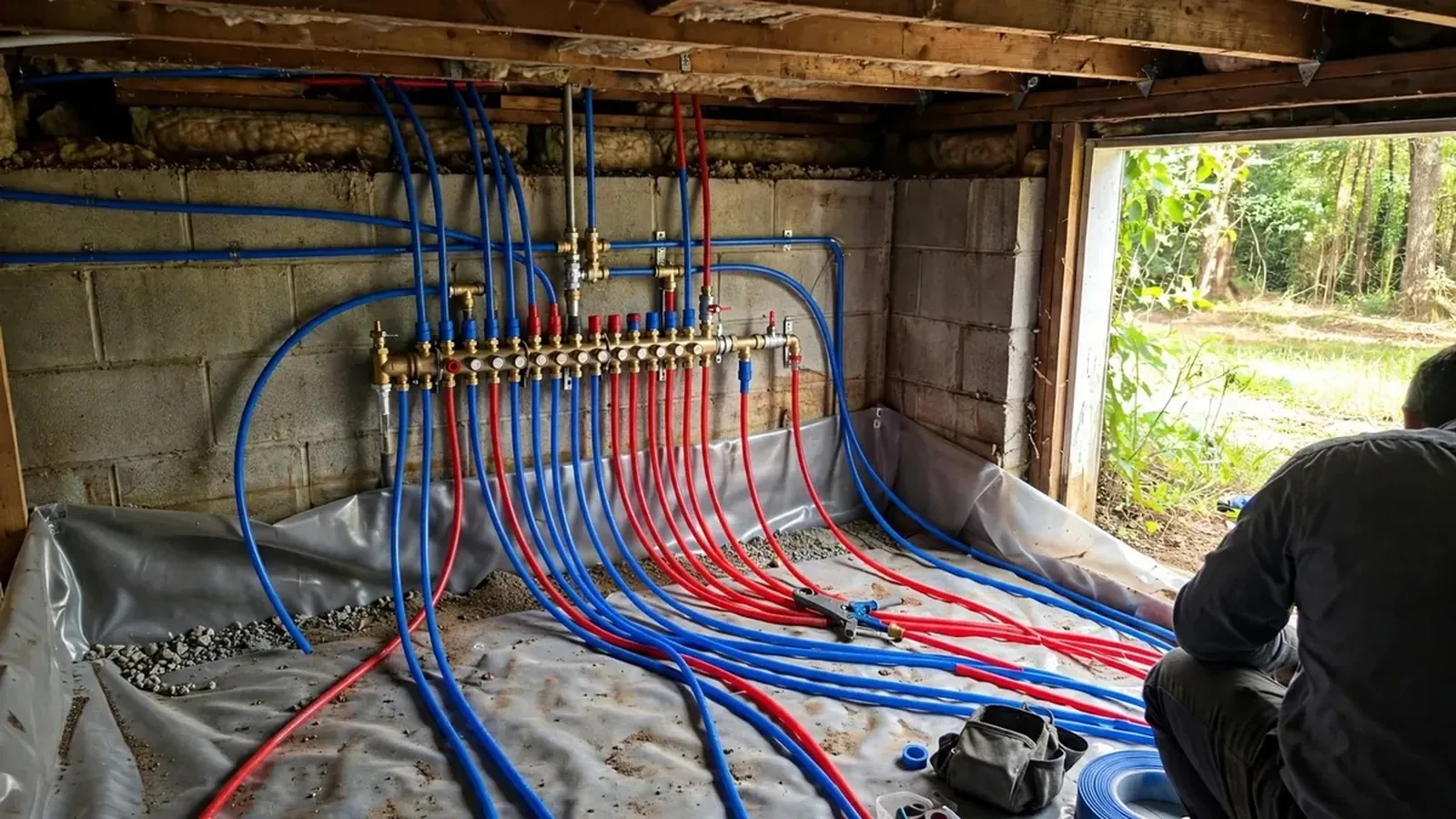
Signs that point to repiping
One leak is a repair. A pattern of leaks is a different story. When a pipe fails in one spot and then another a few months later, the rest of the pipe is usually the same age and in the same condition.
- Repeated pinhole leaks, even after repairs.
- Brown or rust-colored water when you open a tap.
- Low pressure at several fixtures, not just one.
- Green or white crust on pipe, or visibly corroded joints.
- Galvanized steel pipe, which rusts from the inside.
Pressure loss deserves a closer look before anyone cuts a wall. Mineral buildup inside old galvanized pipe narrows it over time, but a failing pressure regulator or a partly closed valve can cause the same symptom. We check those first.
PEX or copper
Both materials work well when they are installed correctly, and the better choice depends on the house and what you value. We use the one that suits the job, and we explain the tradeoffs rather than push one.
| Question | PEX | Copper |
|---|---|---|
| Flexibility | Bends around corners and snakes through walls | Rigid, needs more fittings |
| Freeze tolerance | Expands better than rigid pipe, still can split | Splits readily when frozen |
| Fittings | Crimp or expansion connections | Soldered or press connections |
| Exposure | Not for sunlight or outdoor use | Can run exposed where code allows |
| Install effort | Usually less cutting into walls | More labor to route and join |
Neither pipe is a cure for a bad pressure regulator or a failing water heater, and both need correct support and clearances. Ask which pipe each plumber proposes and why.
Whole house or partial
When a partial repipe is enough
If the problem sits in one run, such as the kitchen supply or the line to a bathroom, replacing that section can fix it. This is also a good fit when part of the house was already updated and the rest is still sound.
When the whole house makes sense
If pipes of the same age are failing in many places, patching one run just moves the leak. A whole house repipe replaces the supply lines from the main valve to every fixture in a single project. It is more disruptive up front, and it ends the cycle of repairs.
Not sure which route fits your house? Call and a plumber will talk it through. Urgent leaks can use the 24/7 line.
Call (855) 575-2890What a repipe involves
A repipe is planned in phases so you are not left without water for long. We walk the house, find the main shutoff and decide where the new lines will run, then open small access holes in walls and ceilings where we need them.
- Plan the routes. We decide where each new line goes and where access is needed.
- Shut off and drain. Water is off for part of a day or longer, and we tell you in advance.
- Run the new pipe. New lines go in with correct support and connections, then are pressure tested.
- Close the access and test again. We restore flow, check each fixture and leave the access ready for a drywall patch.
Patching and painting the openings is a separate trade, and we do not do it. Plan for that before the project starts.
What drives the price of a repipe
Repiping cost depends on the size of the house and how reachable the pipes are, so we do not post a number without seeing it. We give a clear price before work starts, after a walk-through.
Wear and corrosion are usually not covered by home policies, while a sudden burst may be. Ask your insurer where your situation falls.
Permits and licensing in Hazelwood
Plumbing work in Hazelwood requires a plumber licensed through St. Louis County, and the city contracts with the county for plumbing permits and inspections. A repipe generally needs a permit and an inspection, which protects you if the house is sold later.
Check the license of anyone you hire before they start. If you are weighing a patch against a full replacement, our burst pipe repair page explains when a repair holds. If the leak is in the underground line to the street, see water line repair and replacement. We also work in Maryland Heights and the surrounding towns.
PEX tubing systems are covered by ASTM F877, and fittings and pipe that carry drinking water should be certified to NSF/ANSI 61 and the lead-free requirements of NSF/ANSI 372. A repipe quote should name the pipe material and its standard.
Honest limits
Repiping does not fix a drain problem, a bad water heater or low pressure from the utility. We do not guess at the cause. We check pressure at the house and rule out simpler fixes first, and if the pipes are fine we say so.
We also do not repipe a house on the phone. A walk-through is how we find out what the walls and the pipe run really look like.
Frequently asked questions
Repeated leaks in different spots, rusty water, low pressure at many fixtures and galvanized steel pipe are the common signs. A walk-through and a pressure check tell us whether a repair or a repipe is the better call.
Neither is better in every case. PEX is flexible and often easier to route through finished walls. Copper is rigid and can run exposed. The right pick depends on your house and how the pipes will be installed.
Generally yes. Plumbing permits and inspections in Hazelwood go through St. Louis County by way of the city, and the plumber should be licensed with the county.
It depends on the size of the house and how many fixtures are involved. We tell you the plan before work starts, and we aim to keep you without water as briefly as we can.
No. We leave the access holes ready for a patch. Drywall and paint are a separate trade.
No, and anyone who does is guessing. We give a clear price before work starts, after we see the house and the pipes.
Questions about your situation? A licensed plumber is on the line any hour.
Call (855) 575-2890