
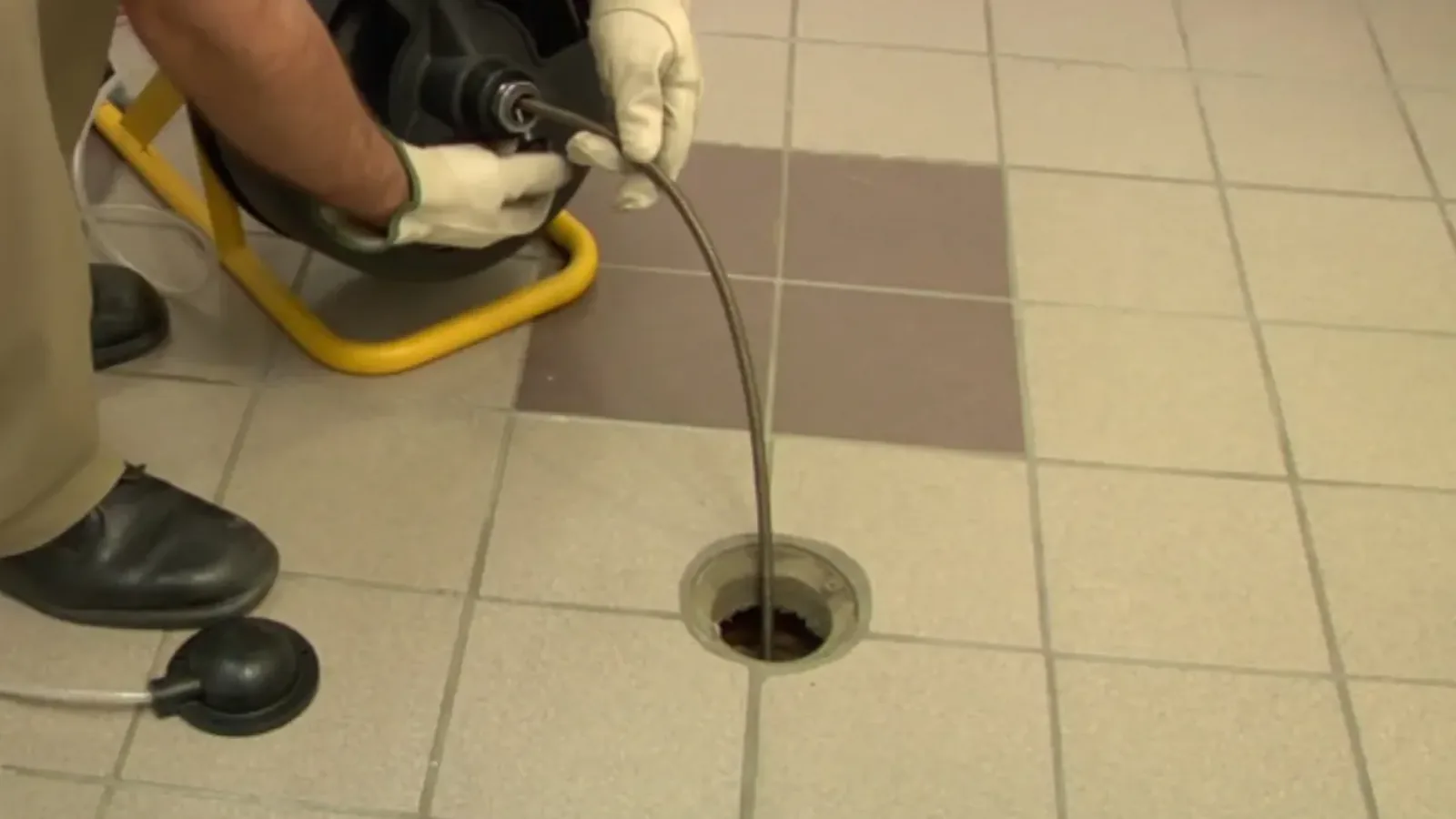
Find out how big the clog is first
Run water in the nearby fixtures before you pick a tool. If only the kitchen sink is slow, the clog is in that trap or branch. If the tub, a floor drain and a toilet all act up together, the blockage is further down, in the main drain.
A single slow drain is a good home project. A line that backs up water in the lowest drain of the house, which is often a basement floor drain, is not. Stop here and read the section on when to call a plumber.
Which method fits which clog
| Where it is | Try first | Then |
|---|---|---|
| Bathroom sink or tub | Pull the stopper and clear hair by hand | Hand drain snake, then hot water |
| Kitchen sink with grease | Hot soapy water and a cup plunger | Remove and clean the trap, then snake |
| Toilet | Flange plunger with steady strokes | Closet auger, never a standard snake |
| Laundry standpipe | Check the lint trap and hose | Snake the standpipe by hand |
| Several fixtures | Stop. Do not plunge or pour anything | Call a plumber |
Step by step for a sink or tub
- Clear what you can see. Lift out the stopper or strainer, wipe off the hair and soap film, and run hot water for a minute.
- Plunge with a seal. Block the overflow with a wet rag, cover the drain with a cup plunger and push down and up about ten times without breaking the seal.
- Open the trap in a kitchen sink. Put a bucket under the curved pipe, loosen the slip nuts and clean out the gunk. Reassemble and tighten by hand, then a quarter turn more.
- Run a hand snake. Feed it into the drain until you feel resistance, turn the handle to hook the clog, and pull it back out. Wear gloves.
- Flush and test. Run hot water for a couple of minutes and watch for slow spots.
What to skip
Chemical drain cleaners are the first thing many people reach for, and the last thing a plumber wants to see. The liquid sits on top of a fully stopped pipe, heats up and can damage older metal or plastic. It also burns skin if a plumber has to open the line later.
Boiling water can crack a porcelain bowl and soften PVC joints, so use hot tap water instead. Wire coat hangers scratch pipe and snag in traps. And never mix two different cleaners, since the combination can release toxic gas.
Hazelwood notes on where a clog becomes the owner's problem
Hazelwood is served by the Metropolitan St. Louis Sewer District, which maintains the public sewers. The private lateral from the house to the public main is generally the property owner's responsibility, as MSD cities like Kirkwood state on their own sites. That means a main line clog is usually yours to pay for, so confirm with MSD at 314-768-6260 before you assume otherwise.
If you suspect the clog is past your house, find the cleanout, a capped pipe near the foundation or in the basement. Do not open it with a full line behind it, because backed-up water can flow out fast. Leave that to a plumber, who can see how full the line is before releasing the cap.
The traps and vents required by the International Plumbing Code (IPC) are what keep water draining freely and sewer gas out. If a drain gurgles after you clear it, the problem may be venting, not the clog.
What a plumber visit costs if the home fix fails
National cost guides put a basic drain cleaning at roughly $100 to $275, and a main line or multi-fixture clog at $175 to $600. A severe main line that needs hydro jetting can run $300 to $800 or more. A camera look costs roughly $125 to $500. Hourly rates run $45 to $150 nationally, with a call-out fee of $50 to $200.
Those are national ranges, not a quote. We state a clear price before work starts.
Most homeowner policies do not pay for clogs from buildup. Ask about sudden backup coverage if water damaged the floor.
When to call a plumber
Call when more than one drain is slow, when a toilet gurgles after another fixture runs, or when you smell sewage. Also call when you have snaked a drain and it clogs again within a week. Repeat clogs usually mean roots, a low spot in the pipe or damage, and a cable alone will not fix those.
Our drain cleaning service clears the fixture or branch, and sewer line cleaning handles the lateral when the main is the problem. When grease or scale coats the pipe wall, hydro jetting scours it clean instead of poking a hole through. Neighbors in Florissant and Bridgeton call about the same problems.
We do not recommend pouring cleaner into a line that is already backing up. If sewage is rising in a floor drain, keep water off and call the 24/7 line.
Habits that keep drains open
- Pour cooking grease into a can, not the sink.
- Use a hair catcher in the tub and shower.
- Flush only toilet paper, and skip wipes marked flushable.
- Run hot tap water for a minute after washing dishes.
- Clean the kitchen trap once a year if the sink drains slowly.
Frequently asked questions
Start with a cup plunger and hot tap water. If that fails, clean the trap under a kitchen sink or run a hand snake. Skip chemical cleaners.
It can freshen a drain and loosen light buildup, but it will not move a solid clog of hair or grease. Use it as maintenance, not a fix.
Hair and soap film build up on the pipe wall and catch new debris. If it returns quickly, a plumber can cable the branch or camera the line to find a deeper cause.
The private lateral from the house to the public main is generally the owner's responsibility, while MSD maintains the public sewer. Confirm your case with MSD at 314-768-6260.
Use a closet auger made for toilets instead. A standard snake can scratch the porcelain bowl.
When water or sewage rises in a floor drain, tub or shower after you flush or run the washer. Stop using water and call the 24/7 line.
Questions about your situation? A licensed plumber is on the line any hour.
Call (855) 575-2890